Planning an aurora expedition window
A good aurora trip is not built around luck alone. It balances dark skies, flexible nights, warm recovery, and routes that still matter in daylight.
Aurora travel has a reputation for chance, and some of that is true. The sky has its own timing. But a strong expedition window gives travelers more than hope: it creates enough flexibility to be ready when the night opens.
Darkness is the first requirement. We choose seasons and locations where night is long enough, artificial light is low, and the route can move between viewing points without turning every evening into a rushed transfer.
Weather matters as much as solar activity. A strong forecast means little if the coast is locked in cloud. Guides track wind direction, local terrain effects, and the way snow or rain changes road access. Sometimes the best aurora decision is made hours before sunset, when the team chooses where to wait.
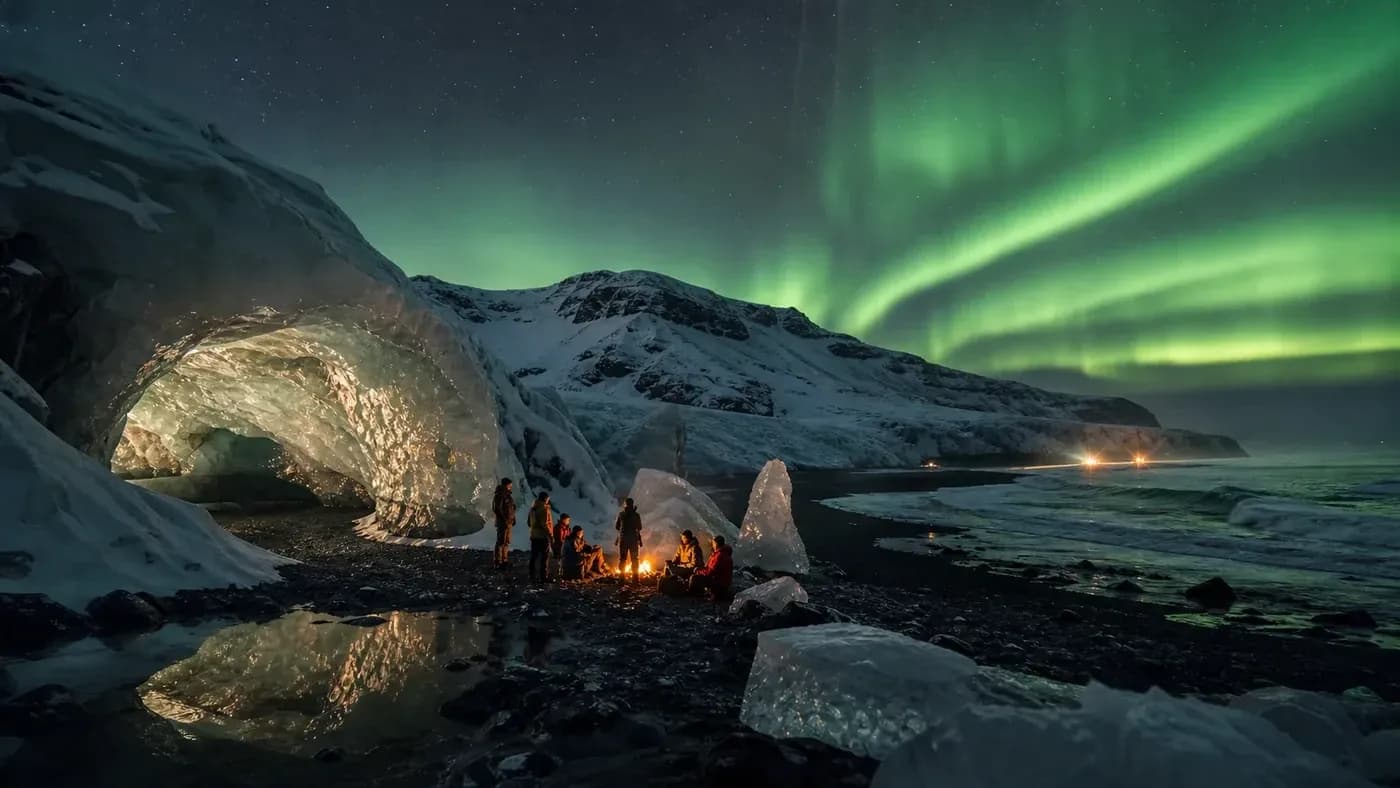
The daylight plan still has to be worth the journey. Glacier margins, black-sand coastlines, ice caves, and winter ridges give the trip substance even before the sky turns green. That balance keeps the expedition from becoming a single-outcome chase.
Recovery is part of the design. Late nights need slower mornings, warm meals, and enough lodge or camp rhythm to keep people rested. Without recovery, the aurora becomes a beautiful reason to arrive tired at every real objective.
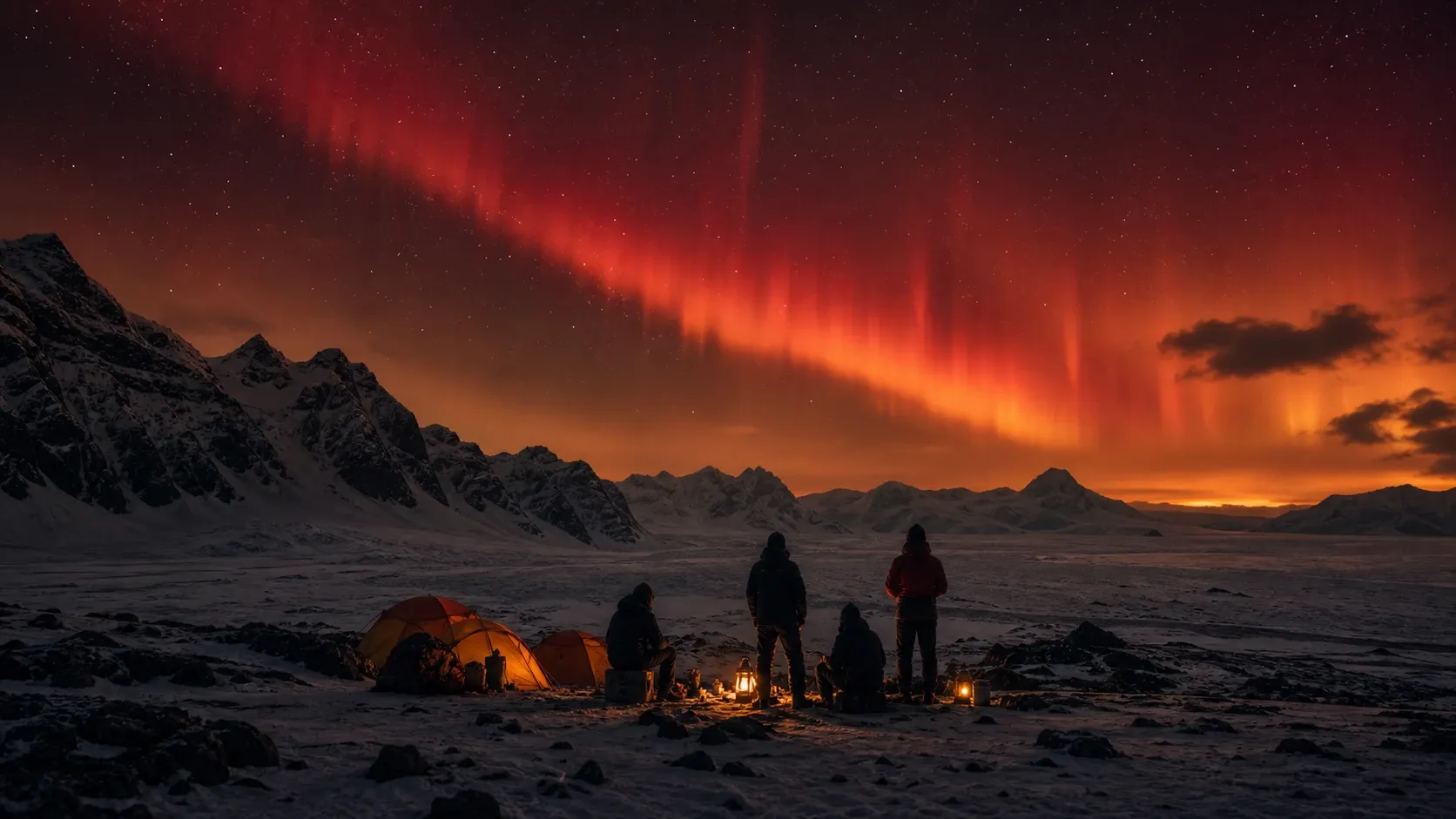
Good aurora guiding is quiet preparation. It means having layers ready, camera expectations set, hot drinks close, and a clear plan for when the sky begins to move. The best moments rarely wait for someone still searching for gloves.
When the window works, it feels effortless. But the effort is hidden in the planning: flexible nights, sensible daylight routes, and a team that knows how to wait without losing the thread of the journey.